















Why Intellectual Property SEO Requires Specialization
Intellectual property firms face marketing challenges that generic legal SEO simply can’t solve. Your potential clients aren’t searching for “lawyer near me.” They’re researching complex patent strategies, trademark filing procedures, or types of restrictive covenants before they ever reach out. Meanwhile, you’re competing against established national firms, boutique specialists, and Big Law IP practices, all vying for the same narrow pool of high-value clients.
These clients conduct extensive research before selecting counsel, often evaluating firms based on specific technical expertise, industry experience, and published thought leadership. Generic SEO strategies that work for intellectual property practices fail here because they don’t account for the technical complexity, extended evaluation periods, or the credentialing process sophisticated IP clients demand.
The Unique Intellectual Property SEO Challenges You're Facing
Potential clients search using technical terminology and industry-specific language. Effective SEO requires understanding the legal aspects and the properties being protected well enough to create authoritative content, target the right keywords, and demonstrate genuine expertise.
In-house counsel and executives conduct extensive due diligence, evaluate multiple firms, review published articles and speaking engagements, and assess specific case experience before reaching out. Your SEO strategy must support this extended journey with content at every stage—from educational resources that build awareness to detailed practice area pages that enable comparison.
Breaking through requires strategic positioning in specific niches where you have genuine expertise, not broad attempts to rank for every IP-related term. You also face competition from legal directories, law school resources, and government websites (like USPTO) that dominate informational searches, requiring a sophisticated approach to identify and capture commercial intent.
They’re evaluating you against specific criteria: relevant technical background, experience in their industry sector, published insights on current IP issues, and often geographic proximity to key venues (certain district courts, USPTO, ITC). They search differently than consumers—using technical terms, researching specific legal procedures, and often looking for attorneys by name after getting referrals. Your SEO must address this informed, deliberate search behavior rather than trying to capture broad, uninformed traffic.
Our Intellectual Property SEO Approach
9Sail’s intellectual property SEO methodology integrates years of legal industry expertise with proven optimization strategies specifically adapted for IP firm competitive dynamics, client behavior, and matter economics. We don’t apply generic SEO playbooks. We build customized visibility strategies that account for your specific case types, target markets, competitive landscape, and growth objectives.
Our approach begins with comprehensive competitive analysis identifying keyword opportunities, content gaps, and technical deficiencies limiting your current visibility. From this foundation, we develop integrated SEO programs combining technical optimization, strategic content development, authoritative link building, and local search dominance. Every tactic is designed specifically for your ideal client buyer behavior.
We operate as an extension of your team through our Think Like An Owner™ philosophy, aligning our success with yours by focusing on metrics that matter: organic lead volume, cost-per-lead, client acquisition cost, and actual ROI. Our account teams include legal marketing strategists who understand intellectual property practice economics and can speak intelligently about case acceptance criteria, competitive positioning, and strategic growth priorities.
Our Trusted Process
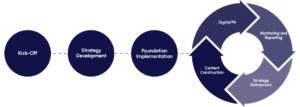
Strategies Tailored for Intellectual Property SEO Success

We target the technical, high-intent searches your ideal clients actually use. This means going beyond generic terms like "IP attorney" to capture technical and sophisticated terms with search volume.

IP clients evaluate knowledge and experience before making contact, so we develop content that showcases your technical knowledge and legal acumen. We focus on depth over breadth—comprehensive, evergreen resources that answer complex questions rather than shallow blog posts chasing traffic.

Most IP practices serve clients nationally or internationally, but venue still matters. We balance broad national rankings for your core practice areas with targeted visibility in key jurisdictions.
Core Components of Intellectual Property SEO
Practice-Specific Keyword Architecture: We develop comprehensive keyword taxonomies organized by matter type, search intent, and geographic modifiers. This granular approach captures prospects at every stage of the buyer journey while demonstrating specialized expertise that converts high-value engagements.
Content Strategy for the Intellectual Property Client Journey: intellectual property content must balance immediate conversion needs with educational trust-building across the prospect’s journey. Our content strategies include transactional service pages optimized for “hire now” searches, educational content addressing common questions and concerns, case type deep-dives demonstrating specialized expertise, location pages for geographic targeting, and thought leadership establishing your attorneys as authorities.
Local vs. National SEO Balance: Most intellectual property firms need strong local visibility combined with selective national authority building. We optimize for local pack placement through Google Business Profile management, location page development, local citation building, and review generation – critical for capturing “near me” and city-specific searches. Simultaneously, we build national topical authority through comprehensive educational content, thought leadership, and authoritative backlinks that position your firm for informational searches and attract prospects in early research stages who will eventually need local representation.
Technical SEO Foundation: Our technical SEO addresses site speed optimization, mobile responsiveness and usability, Core Web Vitals performance, click-to-call functionality, secure HTTPS implementation, and conversion path optimization. We work hand in hand with your web developer to guide the critical technical SEO fixes that impact your firm’s visibility.
Authoritative Link Building: intellectual property keyword competition means backlink quality and quantity directly impact rankings. Our link acquisition focuses on authoritative, relevant sources – legal directories (Avvo, Justia, FindLaw), local news coverage of your case results or community involvement, legal industry publications, medical and safety organizations, local business associations, and relevant .edu and .gov sources. Every link is acquired through white-hat methods complying with Google guidelines and legal industry ethical standards. We avoid low-quality link schemes that risk penalties and focus on sustainable authority building that compounds over time.
Hear What Our Clients Have to Say

We’ve really enjoyed working with the team at 9 Sail! They’re smart, knowledgeable and responsive. They’ve been tremendously helpful with our SEO and we’ve seen great results from their work. I highly recommend them.
Lesley Brovner
Peters Brovner, LLP

Working with 9Sail has been a great experience. The team, especially Taylor, has been responsive, receptive, and really cares about personalizing the experience. When you’re looking for a partnership, 9Sail delivers.
Sarah Jacobs
Jacobs Berger LLC
We worked well with other SEO agencies in the past, but 9Sail took it to another level. We have seen significant and measurable increase in website traffic leading to 7-figure plus annual ROI with 9Sail. They know what they are doing.
Domenic Romano
Romano Law
The team at 9Sail is very impressive and has greatly improved our SEO outreach. They are a pleasure to work with and real professionals. I highly recommend them.
Mark Peters
Peters Brovner LLP

I had a great experience with 9sail for over 3 years. They have helped my fledgling law firm grow its organic presence exponentially. I’m not going to lie, it was a big investment for me at the time. However, it was the best use of all the marketing dollars I have spent.
Shann Chaudhry
The Law Offices of Shann M. Chaudhry
There’s quite a bit of chatter about firms that do SEO and whether it’s worth the money. It’s not that easy to find a trusted partner in this field. In 9Sail, we have found a trusted partner.
Kristin Grant
Grant Attorneys at Law

The staff at 9Sail is top-notch. Every single member I’ve worked with is as good as the next. The team continues to impress me with their knowledge, competitive attitude, and successful results.
Shannon Quinn
Hansen & Rosasco

9Sail is an outstanding, innovative SEO agency for law firms. They are ahead of the curve in terms of trends and knowledge. Every member of their team is engaging and provides excellent client service. You aren’t a number at 9Sail; rather, you are a part of their family and ecosystem. SEO is complex and fluid, and isn’t something you should try to DIY. Leave it to the experts: 9Sail!
Rosanna Berardi
Berardi Immigration Law

9sail is an incredible partner in my firm’s efforts to improve my firm’s web presence through SEO, PPC, and the emerging world of AI. They worked hard to understand our niche practice area, dug into what we needed, responded to challenges, and have improved our placement substantially. They’re super knowledgeable, extremely responsive, and simply the best legal services support service provider I’ve worked with.
Dave Jochnowitz
Outten & Golden

We’ve had an excellent experience working with 9sail. They handle our Marketing and SEO, and the results have been outstanding. Their communication is prompt, their recommendations are well thought out and strategic, and they consistently keep us informed about what they’re doing and why. What sets them apart is that they feel like an extension of our law firm’s team.
Pete Steele
Cohen Clearly